12 Common Conditions Massage Therapy May Help With

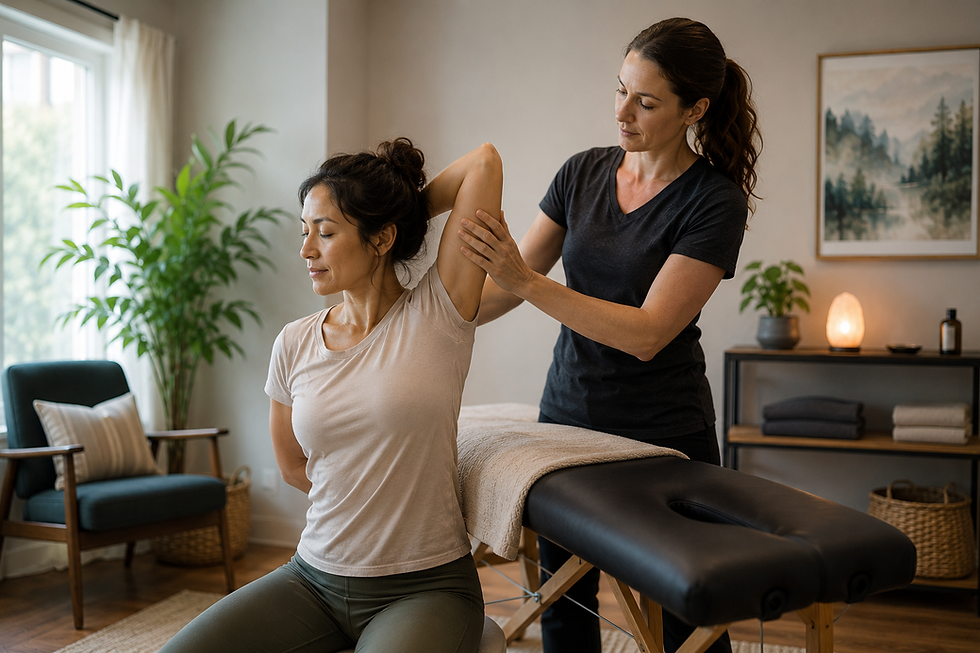
Massage therapy is often associated with relaxation, but many people seek treatment because something in the body is not moving, recovering, or functioning the way they want it to.
Pain, stiffness, tension, nerve-like symptoms, postural strain, and stress-related holding patterns can all affect daily life. Sometimes the issue is local. Other times, discomfort is part of a larger pattern involving muscles, fascia, joints, posture, movement habits, and the nervous system.
At Rise Massage Therapy in Osgoode, treatment is focused on understanding the body as a connected system. Sessions may include targeted massage, myofascial release, trigger point therapy, deep tissue work, gentle lymphatic-style drainage, and movement-based assessment depending on your needs.
Below are 12 common concerns massage therapy may help support.
1. Tension Headaches and Migraine-Related Tension
Headaches may be influenced by neck tension, jaw clenching, shoulder bracing, desk posture, stress, or restricted movement through the upper back and ribs.
Massage therapy may help reduce some of the muscular and nervous system tension that contributes to headache patterns. Treatment often focuses on the neck, shoulders, jaw, scalp, upper back, and chest.
Migraines are more complex and may require medical care, but massage therapy can sometimes be a helpful part of a broader support plan when muscular tension, stress, or neck restriction are part of the pattern.
2. Frozen Shoulder and Restricted Shoulder Mobility
Frozen shoulder, also called adhesive capsulitis, can involve significant pain and reduced range of motion. It often requires time, patience, and appropriate care.
Massage therapy cannot force a frozen shoulder to move before it is ready, but it may help reduce surrounding muscle tension, support circulation, ease protective guarding, and improve comfort through the neck, chest, upper back, and shoulder blade area.
Treatment is gentle, specific, and adapted to the stage of irritation and mobility.
3. Sciatica and Nerve-Like Leg Symptoms
Sciatica refers to irritation involving the sciatic nerve pathway, often felt through the low back, glutes, back of the leg, or foot.
Symptoms may include pain, tingling, burning, numbness, or a traveling sensation down the leg. These symptoms should be treated carefully, especially if they are new, worsening, or accompanied by weakness.
Massage therapy may help when surrounding muscle tension, hip restriction, glute tension, or low back guarding are contributing to discomfort. Treatment may focus on the low back, pelvis, glutes, hamstrings, and hips while respecting nerve sensitivity.
4. Plantar Fasciitis and Foot Pain
Foot pain may show up in the heel, arch, sole, toes, or ball of the foot. While the foot itself may need direct treatment, the calves, ankles, knees, hips, and gait patterns can also influence how the foot feels.
Massage therapy may help by working through the plantar fascia, calves, Achilles region, ankles, and surrounding soft tissues. Treatment may also look at how the lower body is sharing load during walking, standing, and daily movement.
5. TMJ Tension and Jaw Discomfort
Jaw tension, clenching, grinding, and TMJ-related discomfort can contribute to headaches, facial tension, neck pain, and a feeling of tightness through the jaw or temples.
Massage therapy may include work through the jaw, temples, neck, scalp, shoulders, and upper chest. Intraoral jaw work may be used when appropriate, but only with clear discussion and consent.
The goal is to reduce excess tension, improve comfort, and support better awareness of jaw and neck holding patterns.
6. Postural Strain from Desk Work
Desk work, driving, laptop use, and phone scrolling can all contribute to neck tension, shoulder rounding, upper back stiffness, jaw clenching, low back discomfort, and hip tightness.
Massage therapy may help by addressing the areas that tend to become restricted or overloaded from prolonged sitting and repeated positions. This often includes the neck, shoulders, chest, upper back, ribs, forearms, low back, and hips.
Treatment may also include practical movement strategies to help interrupt the pattern between sessions.
7. Post-Surgical Recovery and Scar Tissue Support
After surgery, the body may develop scar tissue, protective guarding, swelling, sensitivity, numbness, or reduced mobility around the area.
Massage therapy may help support comfort, tissue mobility, body awareness, and movement once the area is healed enough for treatment. Scar tissue work is gentle, specific, and consent-based. Lymphatic-style drainage may also be used when appropriate to support fluid movement.
Post-surgical massage should always respect medical guidance, healing timelines, and any restrictions from your health-care provider.
8. Thoracic Outlet-Type Symptoms
Thoracic outlet symptoms can involve compression or irritation around the neck, collarbone, first rib, chest, and shoulder region. Symptoms may include arm heaviness, tingling, numbness, weakness, or discomfort into the arm or hand.
Massage therapy may help reduce surrounding soft tissue tension through areas such as the neck, scalenes, pectorals, upper back, ribs, and shoulders.
Because nerve and vascular symptoms can be complex, assessment and medical guidance may be important, especially if symptoms are significant, worsening, or persistent.
9. Carpal Tunnel-Type Symptoms and Wrist Pain
Wrist and hand symptoms are often blamed only on the wrist, but the forearms, elbows, shoulders, chest, neck, and nerve pathways can all influence how the hand feels.
Massage therapy may help when muscular tension, forearm overuse, gripping patterns, shoulder bracing, or chest and neck restriction are contributing to symptoms.
True carpal tunnel syndrome involves compression of the median nerve and may require medical assessment. Massage therapy can sometimes support comfort and function, but it does not replace diagnosis or appropriate medical care.
10. Knee Pain and Lower-Body Strain
Knee pain may be influenced by the joint itself, but also by the hips, quads, hamstrings, calves, ankles, feet, gait, and daily movement habits.
Massage therapy may help reduce excess tension through the muscles and fascia that influence knee tracking and load-sharing. Treatment may include the quads, hamstrings, calves, outer thigh, glutes, hips, feet, and surrounding tissues.
The goal is to support better movement through the whole lower-body chain rather than treating the knee as an isolated part.
11. Repetitive Strain and Overuse Patterns
Repetitive strain can come from typing, gripping, lifting, tool use, massage work, cooking, gardening, driving, sports, or repeated daily movements.
Symptoms may include aching, stiffness, burning, fatigue, tightness, or discomfort through the wrists, elbows, shoulders, neck, back, or hips.
Massage therapy may help reduce soft tissue tension, support circulation, improve mobility, and identify movement habits that may be contributing to recurring strain.
12. Stress-Related Physical Tension
Stress does not only affect the mind. It often shows up in the body through jaw clenching, shallow breathing, tight shoulders, guarded posture, abdominal bracing, low back tension, headaches, and poor sleep.
Massage therapy may help the nervous system downshift by using steady touch, appropriate pressure, slower pacing, and a safe treatment environment.
This does not replace mental health care for anxiety, trauma, or chronic stress, but it can be a supportive part of helping the body feel less guarded and more at ease.
A Whole-Body Approach to Massage Therapy in Osgoode
Massage therapy can be useful for many common pain and tension patterns, especially when treatment looks beyond the immediate symptom.
At Rise Massage Therapy in Osgoode, care is focused on the body as an interconnected system. Your treatment may include targeted massage, myofascial release, trigger point therapy, deep tissue work, gentle lymphatic-style drainage, movement-based assessment, and practical self-care strategies.


